

The first menstrual period, known as menarche, is an important stage of puberty. A teenager gets her first period, and most families expect the next one on schedule, four weeks later. It rarely arrives on time. As a gynecologist, this is one of the most common worries parents bring in and in the majority of cases, the body is simply doing what it's built to do at this stage.
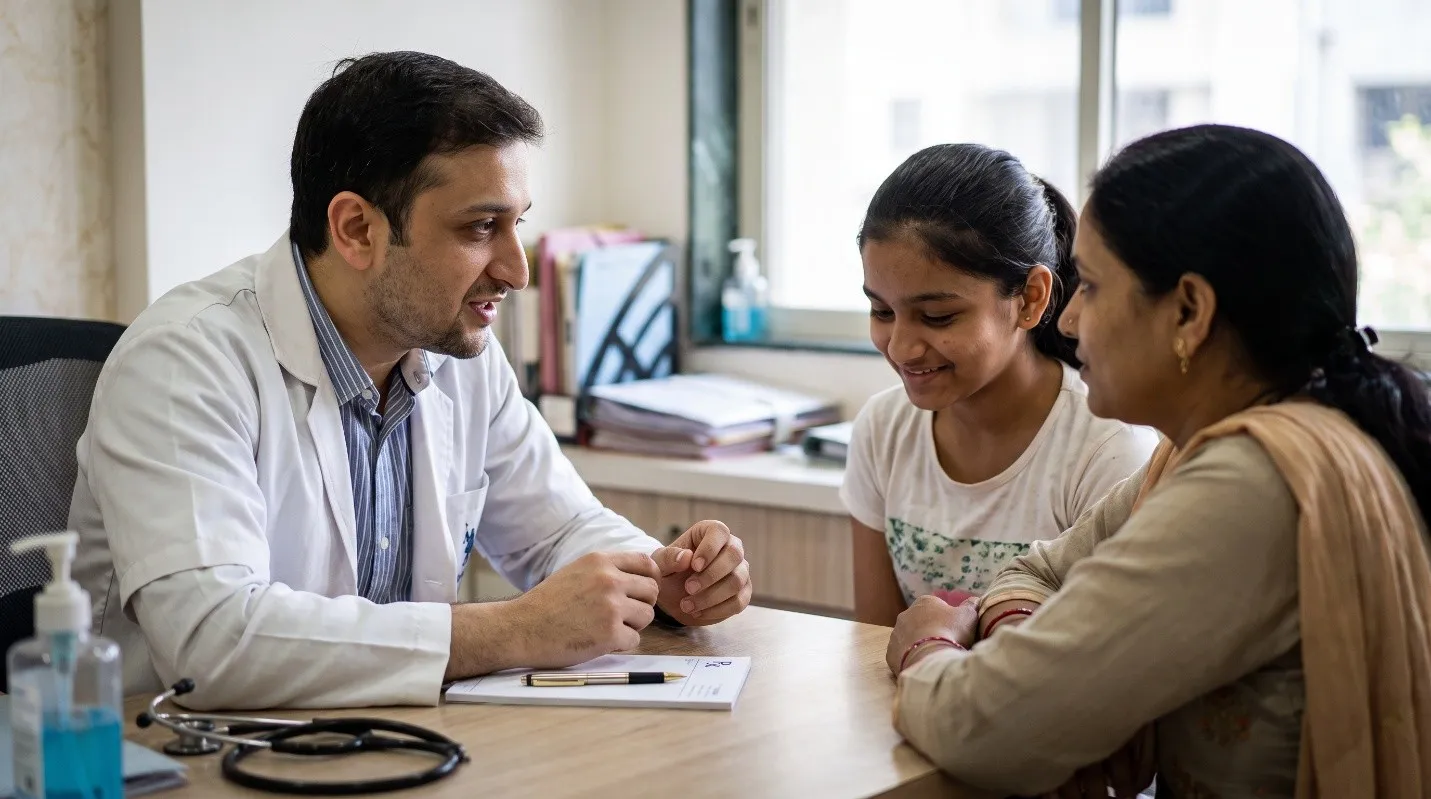
Concerned About Irregular Periods After Menarche?
Persistent or unusual menstrual changes deserve proper evaluation. Understanding the underlying cause can help ensure appropriate guidance and care.
Causes of Irregular Periods After Menarche
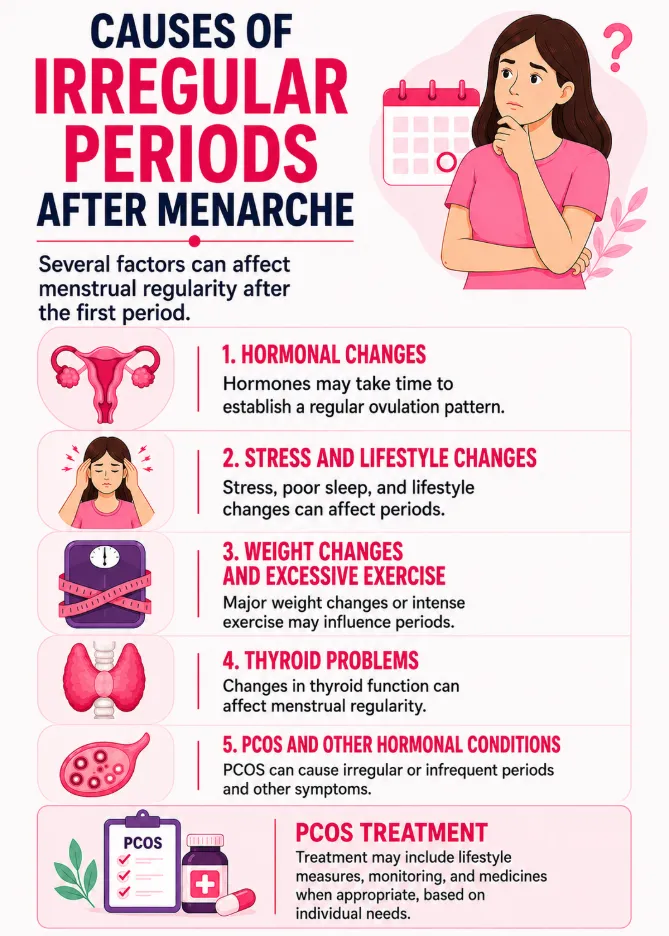
The hormonal loop between the brain and the ovaries takes years to fully mature, not months. Ovulation doesn't happen every cycle right after menarche, and without it, the hormonal cues that keep periods predictable aren't fully wired in yet. That accounts for most of the unpredictability I see in the first two to three years after a girl's first period.
It isn't the only factor, though. We regularly see irregular cycles linked to poor sleep, sudden weight changes, intense athletic training, or exam-season stress. Thyroid imbalances and PCOS are fewer common causes, but real ones especially when irregular periods show up with acne, excess hair growth, or noticeable weight shifts. As one specialist puts it: "In the first two to three years after a girl's first period, it's common for cycles to be unpredictable the body's hormonal signaling is still finding its rhythm."
Dealing with irregular periods?
Our gynecologists diagnose the underlying cause and offer personalized care to regulate your cycle.
When Should You See a Gynecologist?
Irregularity is expected, but there's a line between "still settling" and "needs evaluation." Going more than 90 days without a period after having had one, bleeding heavy enough to soak a pad within an hour for several hours straight, periods lasting beyond seven days, or pain severe enough to keep her home from school these are the cases I tell parents not to sit on.
Dr. Ankesh R. Sahetya
“Tracking menstrual cycles after menarche can help parents and teenagers understand the pattern and identify changes that may need a gynecological evaluation.”
Diagnosis and Treatment for Irregular Periods at Pushpaa Hospital
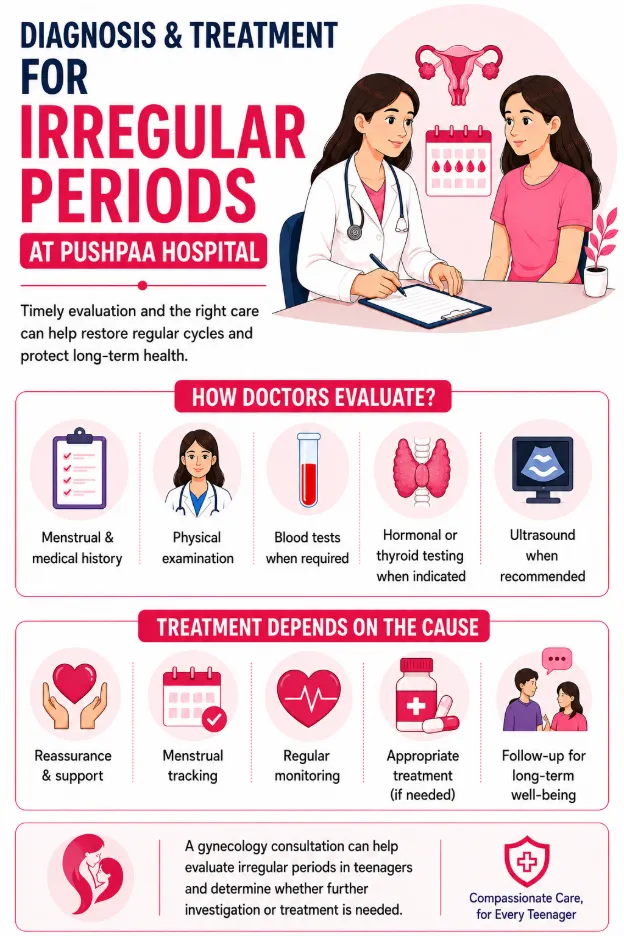
The first visit is usually just a check-up, nothing more. But parents often delay it anyway, simply because they're not sure what to expect. It usually starts as a conversation: cycle history, family history (PCOS and thyroid conditions often run in families), sleep, stress, and training load, particularly for athletes, since heavy exercise can itself delay regular cycles.
From there, doctors may ask for blood tests to check hormone or thyroid levels, or occasionally an ultrasound, depending on what history suggests. If PCOS is confirmed, PCOS treatment for a teenager typically starts conservatively lifestyle changes and cycle regulation rather than jumping straight to medication, since most adolescent cases respond well to this first step. At Pushpaa Hospital women's health team the same specialists who manage high-risk pregnancy care and IVF treatment for adult patients bring that same depth of experience to adolescent cases, so nothing here is treated as guesswork.
Dr. Raju R. Sahetya
“Irregular periods can be part of the normal adjustment after menarche, but persistent or significant changes should be evaluated to understand whether there is an underlying hormonal or medical cause.”
Tips for Maintaining Healthy Menstrual Cycles
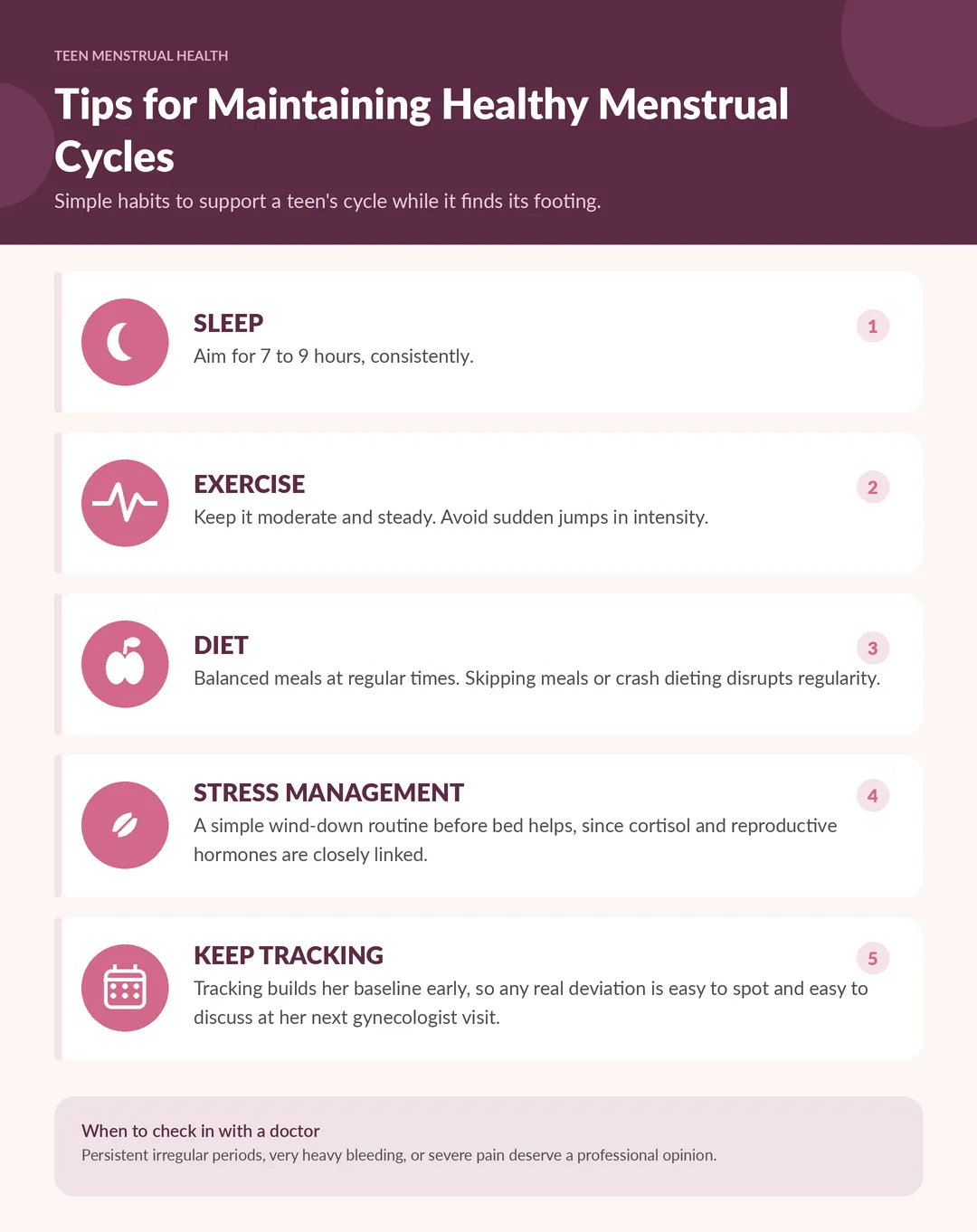
A few habits I recommend while a teen's cycle finds its footing:
- Sleep: aim for seven to nine hours consistently
- Exercise: moderate and steady, avoid sudden intensity jumps
- Diet: consistent, balanced meals skipping meals or crash dieting disrupts regularity
- Stress management: even simple wind-down routines before bed help, since cortisol and reproductive hormones are closely linked
- Keep tracking: it helps her teach her own baseline early, so any real deviation is easy to catch and easy to discuss at her next gynecologist visit
Frequently Asked Questions
1) How long after the first period is it normal for cycles to be irregular?
Up to two to three years post-menarche is typical.
2) Can irregular periods after menarche be a sign of PCOS?
Sometimes especially with acne, excess hair growth, or weight changes.
3) Is it normal to skip a period completely in the first year?
Yes, skipping one or two periods in year one is common.
4) What lifestyle changes actually help with irregular teenage cycles?
Consistent sleep, steady eating, moderate exercise, and stress management.
5) When should a teenager see a gynecologist for irregular periods?
If periods are absent 90+ days, very heavy, prolonged, or paired with severe pain or new hair growth/acne.
Noticed a few of these signs already?
Schedule a consultation at Pushpaa Hospital for a personalized evaluation.
References
- https://www.acog.org/womens-health/faqs/heavy-menstrual-bleeding
- https://www.healthychildren.org/English/health-issues/conditions/obesity/Pages/Polycystic-Ovary-Syndrome.aspx
- https://www.acog.org/clinical/clinical-guidance/committee-opinion/articles/2015/12/menstruation-in-girls-and-adolescents-using-the-menstrual-cycle-as-a-vital-sign
