
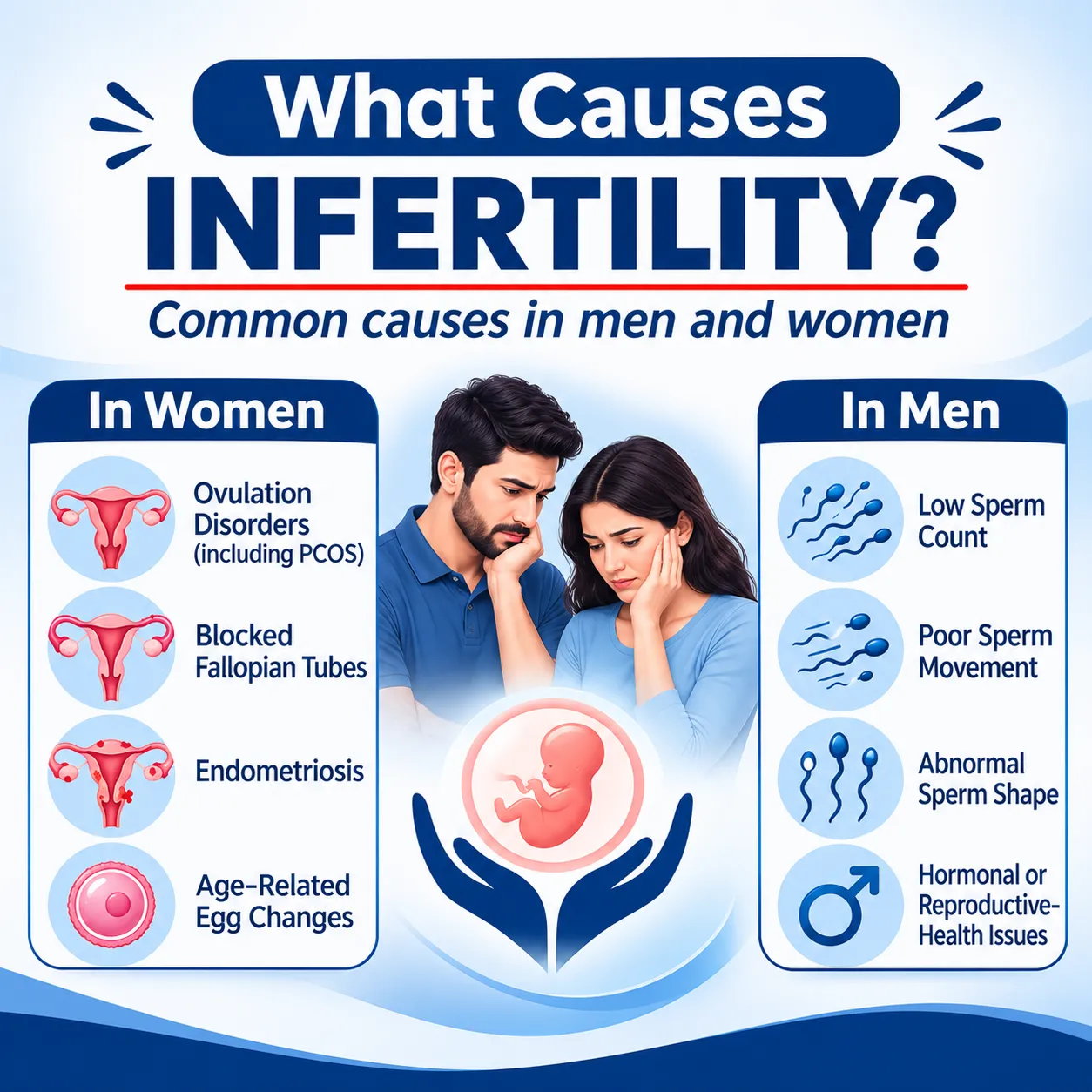
Most couples expect pregnancy within a few months, so a longer wait can be confusing. The causes of infertility are shared fairly evenly. Some sit with the woman, some with the man, some with both, and in a fair number of couples no single cause turns up. Finding out which applies is the first real step, and it usually takes a few basic tests, not anything invasive.
When Conceiving Takes Longer Than Expected
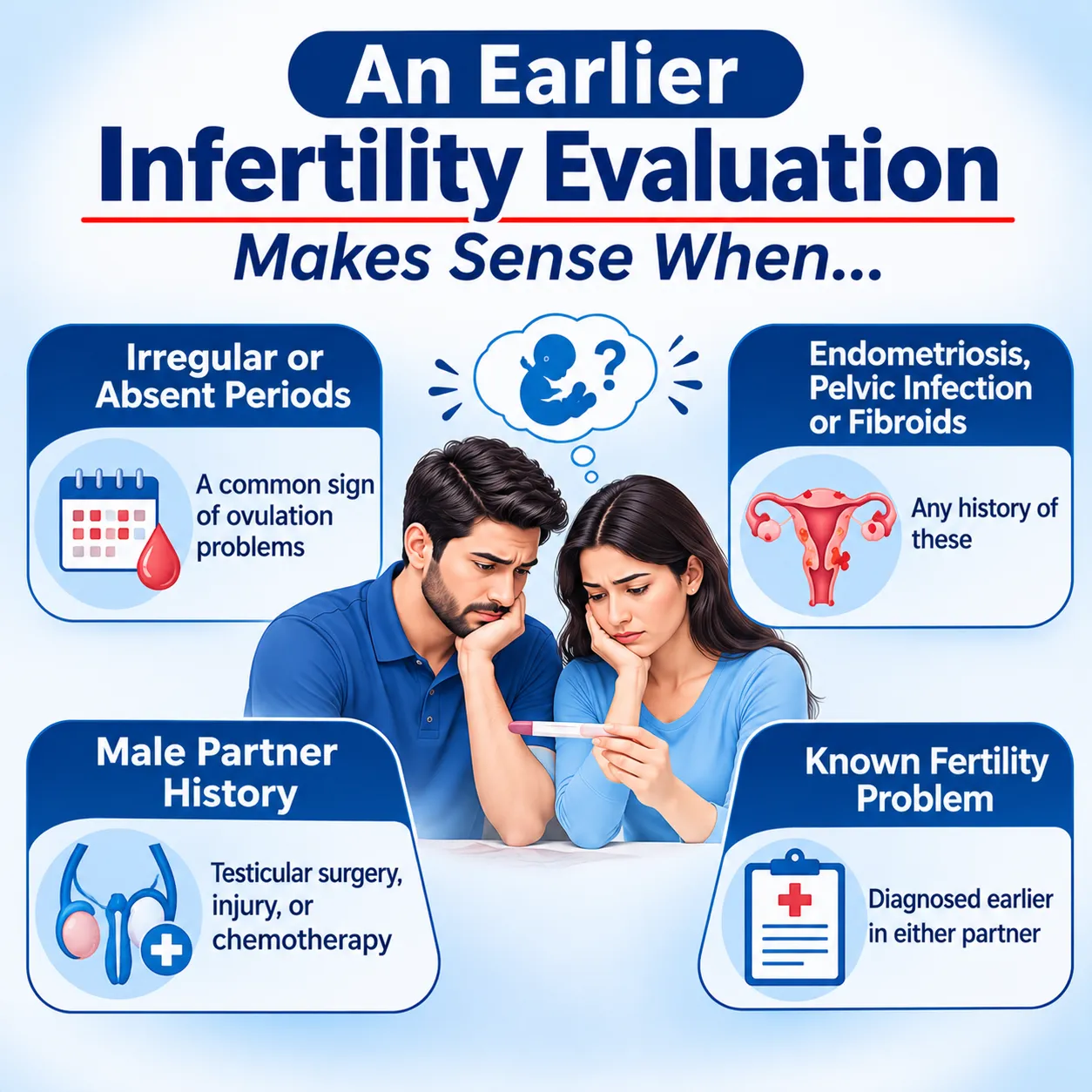
Infertility is defined as not conceiving after 12 months of regular, unprotected intercourse. Women over 35 are usually advised to get evaluated after six months.
Understand Your Fertility Options
Explore personalised fertility care and treatment options with our specialists
Female Factors That Affect Fertility
Conception needs regular ovulation, open fallopian tubes, and a uterus that can support an embryo. A gynecologist can usually narrow down which one is affected.
Ovulation disorders
Tap to read
PCOS treatment is a common reason women seek help, along with thyroid problems and elevated prolactin.
Blocked or damaged tubes
Tap to read
usually from past pelvic infection or surgery, so the egg and sperm never meet.
Endometriosis
Tap to read
uterine-like tissue grows outside the uterus, causing painful periods and sometimes scarring.
Uterine problems
Tap to read
fibroids, polyps, or a septum can interfere with implantation.
Reduced ovarian reserve
Tap to read
fewer eggs than expected for her age, which can lead to early menopause and the need for menopause treatment.
Male Factors That Affect Fertility
Common causes of male infertility include:
Low sperm count or poor motility
Tap to read
few, slow, or irregularly shaped sperm struggle to fertilize the egg.
Varicocele
Tap to read
enlarged scrotal veins raise testicular temperature and lower sperm quality. Varicocele is common and often treatable with surgery.
Hormonal imbalance
Tap to read
low testosterone or abnormal FSH and LH levels disrupt sperm production.
Blockages and ejaculation problems
Tap to read
past infections, hernia repairs, or backward flow of semen into the bladder.
Testicular and genetic causes
Tap to read
undescended testes, mumps after puberty, or chromosomal conditions.
Lifestyle, Age, and Medical Conditions That Play a Part
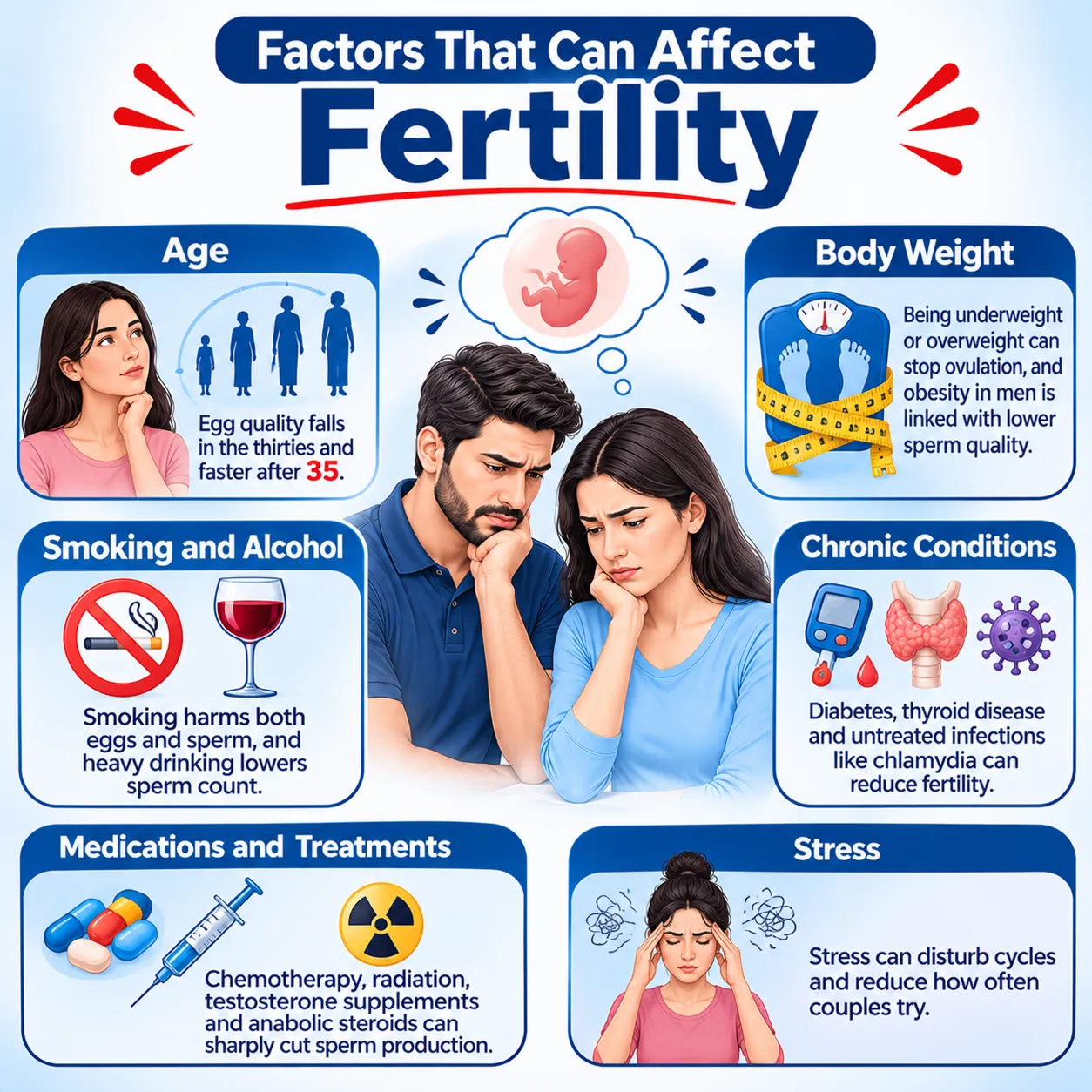
Lifestyle habits, increasing age, and certain medical conditions can affect sperm quality, hormone levels and reproductive health. Factors such as smoking, alcohol, obesity, stress, and chronic illnesses may contribute to male infertility.
Every fertility journey is different. Understanding the underlying cause and choosing the right treatment plan can help couples move forward with greater clarity and confidence.
— Dr. Ankesh Sahetya
Tests Used to Find the Cause
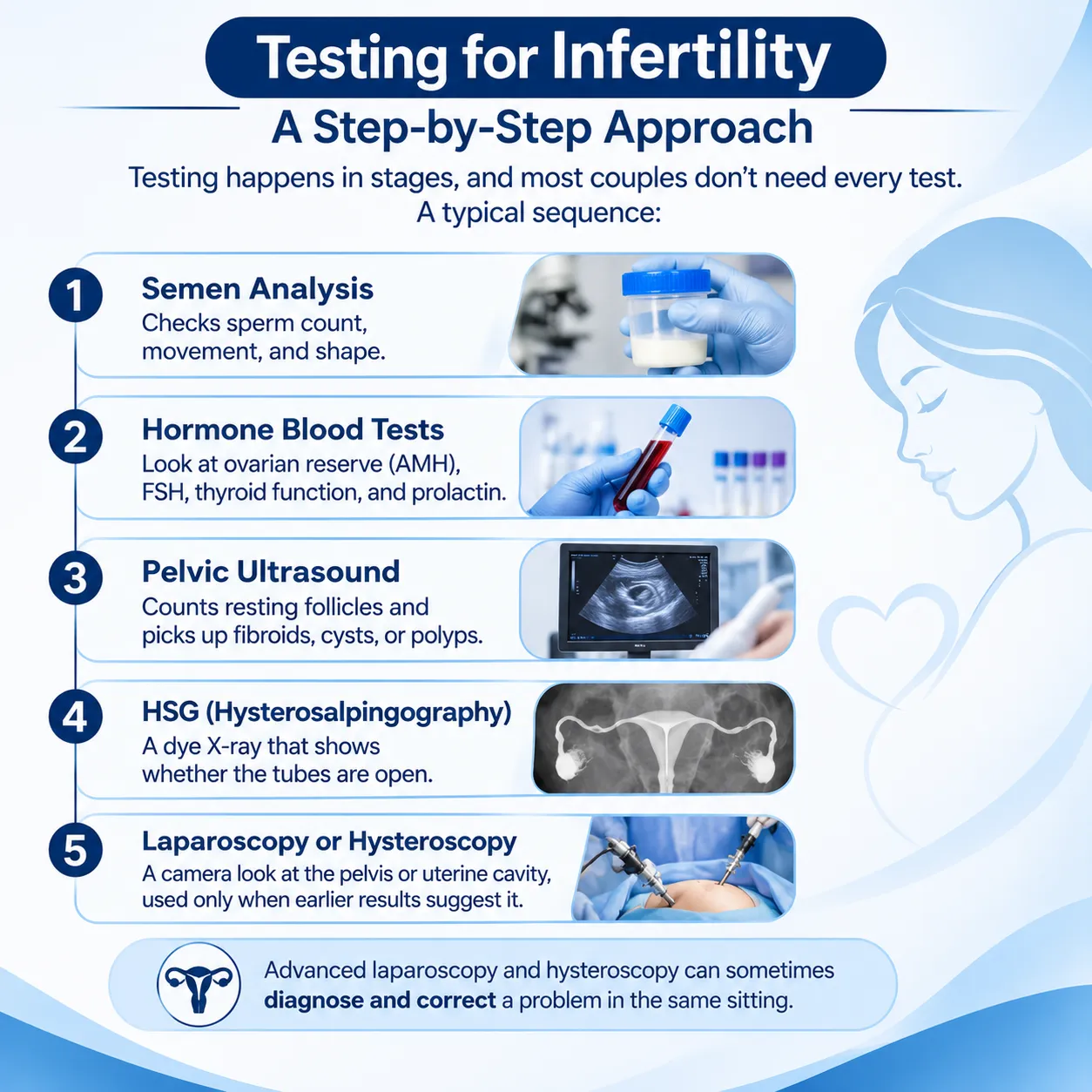
Fertility testing includes semen analysis, hormone blood tests, pelvic ultrasound, and HSG to identify possible reproductive concerns. Laparoscopy or hysteroscopy may be recommended when needed to examine and treat issues affecting the uterus, tubes, or pelvic organs.
Treatment Options Once the Cause Is Known
Treatment follows the cause, and the simplest option that fits usually comes first.
Medical and lifestyle management
Tap to read
treating thyroid disease, adjusting weight, or controlling PCOS can be enough on its own for some couples
Ovulation induction
Tap to read
tablets or injections trigger ovulation, with ultrasound monitoring to track how many follicles develop.
Surgical correction
Tap to read
varicocele repair, removing polyps or fibroids, or laparoscopy for endometriosis.
IUI
Tap to read
prepared sperm is placed in the uterus around ovulation, often used for mild male factor or unexplained infertility. See IUI treatment.
IVF and ICSI
Tap to read
eggs are fertilized in the lab, and ICSI injects a single sperm into each egg, which helps in severe male factor cases. See IVF treatment.
Our Approach for Fertility Evaluation
Joint first consultation
Tap to read
at Pushpaa Hospital in Andheri West, both partners’ history is reviewed together, since either one may hold the answer.
Core evaluation
Tap to read
ovulation assessment and semen analysis are part of the initial workup.
Staged testing
Tap to read
further tests are ordered step by step, starting with the least invasive.
Clear communication
Tap to read
results are explained in plain language before any treatment is discussed.
Partner involvement
Tap to read
with the patient’s consent, partners are included in treatment decisions.
Simple plans first
Tap to read
sometimes the right plan is a few months of timed cycles and lifestyle changes, not a procedure.
Personalized care
Tap to read
our team works with each couple’s age, history, and test results, not a fixed protocol.
Explore Your Path to Parenthood
Get personalised guidance on fertility concerns, available treatment options, and the next steps towards building your family.
Frequently Asked Questions
1. What are the main reasons why women remain infertile?
Ovulation problems, blocked fallopian tubes, endometriosis, and uterine conditions are common causes of female infertility.
2. What causes male infertility, and can it be treated?
Low sperm count, poor motility, varicocele, and hormonal imbalances are common causes, many of which can be treated.
3. Can stress cause infertility in men and women?
Stress does not usually cause infertility directly, but prolonged stress may affect ovulation and the frequency of attempts to conceive.
4. When should couples undergo infertility testing?
Couples should seek evaluation after 12 months of trying if the woman is under 35, or after six months if she is over 35.
5. Can smoking and weight gain affect fertility?
Yes, smoking, unhealthy weight changes, and excessive alcohol consumption can negatively affect fertility in both partners.
