
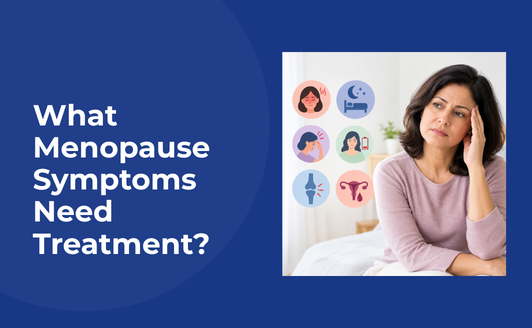
Plenty of women get through menopause with nothing more than a bit of patience and small changes to daily habits. Others don't get off that easily. Once symptoms start affecting sleep, mood, or the ability to get through a normal day, or start putting long-term bone and heart health at risk, that's usually when a doctor should be involved rather than relying on home remedies alone.
According to Pushpaa Hospital, a Maternity Hospital in Andheri West, "Menopause itself isn't a disease, but some of its symptoms do need proper evaluation and treatment to protect a woman's long-term health."
Struggling with menopause symptoms that won't ease up?
Which Menopause Symptoms Usually Need Treatment?
A lot of symptoms quiet down within a few months on their own. A few don't, and those are worth paying attention to.
Severe hot flashes and night sweats: If these are wrecking sleep or interrupting work most days, medication, hormonal or otherwise, tends to help more than waiting it out.
Vaginal dryness and discomfort: Left alone, this one usually gets worse instead of better. Treatment works well here rather than just putting up with it.
Mood swings and anxiety: People often underestimate how much hormones affect mental state during this phase. When the mood shifts don't settle down, it's worth looking at options beyond diet and exercise.
Heavy or irregular bleeding during perimenopause: This shouldn't get brushed off as just part of the process. It needs a proper look to rule out anything else going on.
No two women go through menopause quite the same way, so it's hard to know which symptoms actually need medical attention and which don't.A gynecologist can look at each case individually instead of leaving that guesswork to the patient. If you're looking for a gynecologist in Andheri West, an individual assessment can help you understand what needs attention.
Hormonal changes affecting your health?
Our team treats a range of hormone-related conditions, from PCOS to menopause, with care built around your stage of life.
What Health Risks Come With Untreated Menopause Symptoms?
Not everything about menopause shows up as an obvious symptom. Some risks build up quietly for years before anyone notices.
Bone density loss: As estrogen drops, bone loss speeds up. Over time that raises the odds of osteoporosis and fractures.
Heart disease risk: Cholesterol levels and blood vessel function both shift during menopause, and that's a big part of why heart disease risk goes up afterward.
Sleep disruption: Night sweats don't just leave someone tired the next day. Poor sleep piles onto mood, memory, and general health over time.
Weight and metabolism changes: Hormone shifts change how fat gets stored in the body, and left unchecked, that can add to other health problems down the line.
None of this happens overnight, which is exactly why it's easy to miss. Treating menopause symptoms isn't just about comfort right now. A lot of the time it's about protecting health for years past the transition itself.
Why Choose Pushpaa Hospital?
Finding a women's hospital near me that actually takes menopause seriously, not just pregnancy or fertility, isn't always simple. Pushpaa Hospital has been exactly that kind of hospital for women near me in Andheri West since 1986, treating women through every stage of reproductive health including menopause, with routine checkups and hormone therapy where it actually makes sense.
Menopause doesn't have to be something a woman just gets through on her own. Catching things early usually makes both the symptoms and the long-term risks a lot easier to manage.
Phone: For consultations call +91 77158 10228
Frequently Asked Questions
Do I need treatment if my hot flashes are mild?
Probably not, if they're occasional and mild. It's when they start messing with sleep or everyday life on a regular basis that treatment becomes worth talking about.
Is hormone replacement therapy safe for everyone?
No, not across the board. It comes down to a woman's own health history, and a gynecologist would need to check suitability first.
Can lifestyle changes alone manage menopause symptoms?
Often yes, especially when symptoms are on the milder side. Diet, movement, and managing stress can do a lot before medication ever comes into the conversation.
At what age do menopause symptoms typically start needing attention?
Most commonly somewhere between 45 and 55, though perimenopause can start earlier and still be worth checking if it's causing real disruption.
References
- Mayo Clinic – Menopause: Diagnosis and Treatment
- World Health Organization – Menopause
Disclaimer:This blog is for general informational purposes and does not replace professional medical advice.
