

Starting a family is a dream for many women, but for some, the pregnancy journey can take longer than expected. If you've been trying to conceive without success, it's completely understandable to feel anxious or have questions about what might be happening. Consulting a qualified gynecologist can help you understand the possible reasons behind fertility concerns. The important thing to remember is that female infertility is more common than many people think, and you're certainly not alone in facing this challenge.

Infertility doesn't always mean that pregnancy isn't possible. In many cases, the underlying cause can be identified and treated with the right medical care. At Pushpa Hospital in Andheri West, our fertility specialists take the time to understand your individual concerns, perform a thorough evaluation, and recommend a treatment plan that's tailored to your needs. With timely support and the right guidance, many women are able to move one step closer to achieving their dream of becoming parents.
Unsure about your newborn's vaccine schedule?
Reach out to our team for guidance tailored to your baby's health.
Is Female Infertility More Common Than You Think?
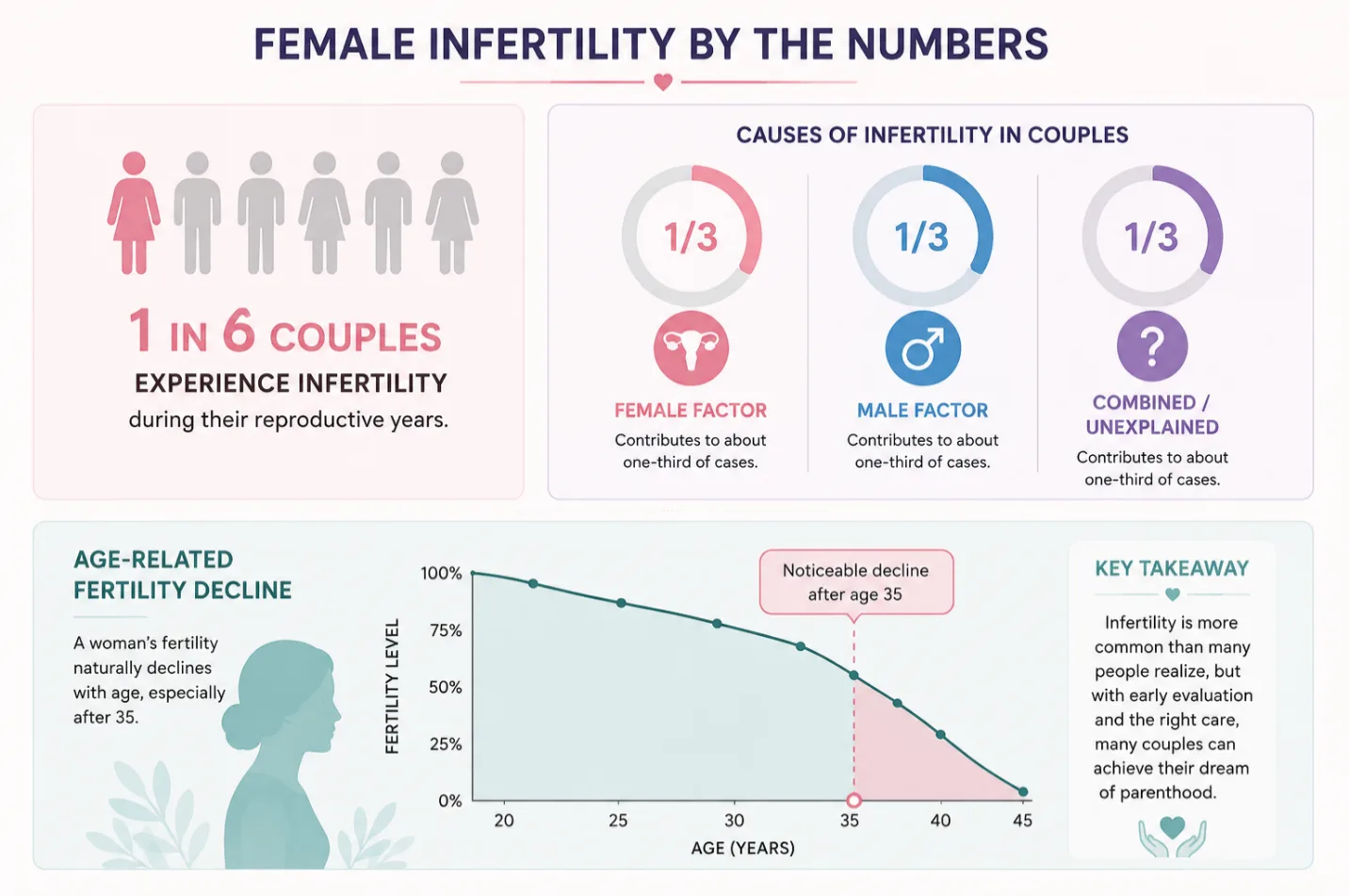
Yes, it is. Many women are surprised to learn that female infertility is more common than they expected. In fact, around 1 in 6 couples experience fertility challenges at some point, and female-related factors contribute to nearly one-third of these cases.
Health conditions such as PCOS, endometriosis, thyroid disorders, and blocked fallopian tubes can affect fertility. Age also plays an important role, with fertility gradually declining after the age of 35.
The good news is that many causes of female infertility can be identified and treated. Seeking medical advice early can help you understand your options and improve your chances of a successful pregnancy.
Quick Facts
- Around 1 in 6 couples experience infertility.
- Female factors contribute to approximately one-third of infertility cases.
- Fertility gradually declines after 35 years of age.
- PCOS is one of the leading causes of female infertility.
Why Does Female Infertility Happen?
Female infertility can develop for many reasons, and in some cases, more than one factor may be involved. Understanding the cause is the first step toward choosing the right treatment.
Ovulation Disorders
Ovulation is essential for pregnancy. Conditions such as Polycystic Ovary Syndrome (PCOS), thyroid disorders, or hormonal imbalances can interfere with regular ovulation, making conception more difficult.
Endometriosis
Endometriosis occurs when tissue similar to the uterine lining grows outside the uterus. It may affect the ovaries, fallopian tubes, or surrounding tissues, reducing fertility in some women.
Blocked Fallopian Tubes
Healthy fallopian tubes allow the egg and sperm to meet. If the tubes are blocked due to infection, previous surgery, or pelvic inflammatory disease, fertilization may not occur naturally.
Age-Related Changes
As women grow older, both the number and quality of eggs naturally decline. Although many women conceive after 35, fertility decreases with age, making early evaluation important when pregnancy is delayed.
Lifestyle Factors
Smoking, excessive alcohol consumption, obesity, poor nutrition, unmanaged stress, and lack of physical activity can also influence reproductive health. Maintaining a healthy lifestyle supports overall fertility and improves treatment outcomes.
"Many women believe infertility is uncommon until they experience it themselves. Early evaluation helps identify the cause and allows us to recommend the most suitable treatment at the right time."
— Dr. Raju R. Sahetya
Can Female Infertility Be Treated?
One of the biggest misconceptions about infertility is that it is always permanent. In reality, many causes of female infertility can be treated successfully with modern medical care.
Treatment depends on the underlying cause and may include:
- Medications to improve ovulation
- Hormonal therapy
- Lifestyle modifications
- Treatment for thyroid disorders or hormonal imbalances
- Minimally invasive surgery for conditions such as endometriosis or fibroids
- Assisted reproductive techniques like Intrauterine Insemination (IUI) and In Vitro Fertilization (IVF)
At Pushpa Hospital, treatment plans are personalized after a detailed fertility assessment. Every woman has different health needs, and individualized care often leads to better outcomes.
Concerned About Your Fertility?
Book a fertility consultation at Pushpa Hospital and receive expert guidance tailored to your reproductive health needs.
When Should You Consult a Fertility Specialist?
Knowing when to seek medical advice is important. Early diagnosis can identify treatable conditions before they become more complicated.
You should consider consulting a fertility specialist if:
- You are under 35 and have been trying to conceive for 12 months without success.
- You are 35 years or older and have been trying for 6 months.
- Your menstrual cycles are irregular or absent.
- You have been diagnosed with PCOS or endometriosis.
- You have experienced recurrent miscarriages.
- You have persistent pelvic pain.
- You have previously had an ectopic pregnancy.
Seeking timely medical care provides clarity and allows you to explore suitable treatment options earlier.

"Infertility doesn't always mean you cannot become pregnant. With the right diagnosis and personalized treatment, many couples can achieve successful pregnancies."
— Dr. Ankesh Sahetya
How Pushpa Hospital Supports Your Fertility Journey

At Pushpa Hospital, we understand that fertility care is about more than medical treatment; it's about supporting you every step of the way. Our experienced specialists use advanced diagnostic tools to identify the cause of infertility and develop personalized treatment plans based on your individual needs.
Whether you require fertility counseling, ovulation induction, IUI, IVF, or ongoing reproductive care, our team is committed to providing compassionate guidance in a supportive environment. We believe that every patient deserves clear communication, evidence-based treatment, and care tailored to their goals of starting or growing a family.
Ready to Take the Next Step?
Schedule your fertility consultation at Pushpa Hospital and begin your journey with experienced fertility specialists who are here to support you.
Final Thoughts

Female infertility is more common than many people realize, but it is also one of the most manageable reproductive health conditions when diagnosed early. Understanding the possible causes and knowing when to seek medical advice can make a significant difference in your fertility journey.
If you have been trying to conceive without success, remember that you do not have to face it alone. The fertility specialists at Pushpa Hospital are dedicated to providing compassionate care, accurate diagnosis, and personalized treatment to help you take the next step toward parenthood.
Frequently Asked Questions
1. How common is female infertility?
Female infertility affects approximately 10–15% of women of reproductive age, making it a common reproductive health concern worldwide.
2. At what age does female fertility begin to decline?
Fertility gradually declines in the late twenties and early thirties, with a more noticeable decrease after 35 years of age.
3. Can female infertility be treated?
Yes. Depending on the cause, treatment may include medications, lifestyle changes, hormonal therapy, surgery, IUI, or IVF.
4. Is infertility always permanent?
No. Many women conceive naturally or with medical assistance after receiving the appropriate diagnosis and treatment.
5. When should I visit a fertility specialist?
If you have been trying to conceive without success for 12 months (or 6 months if you are over 35), or if you have irregular periods, PCOS, endometriosis, or recurrent miscarriages, consult a fertility specialist.
Disclaimer: This article is intended for informational purposes only and should not be considered a substitute for professional medical advice, diagnosis, or treatment. Please consult a qualified healthcare provider at Pushpa Hospital for personalized fertility evaluation and guidance.
References:
https://www.who.int/news-room/fact-sheets/detail/infertility
https://www.cdc.gov/pcos/index.html
https://www.who.int/news-room/fact-sheets/detail/endometriosis
https://www.nhs.uk/tests-and-treatments/ivf/
