
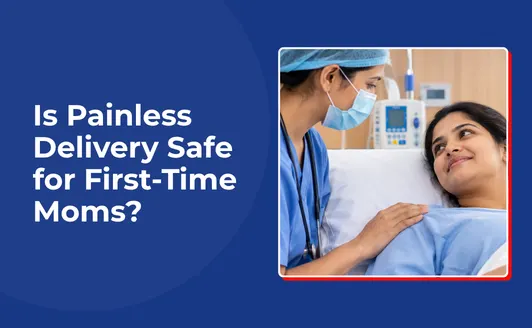
Labour pain is one of the biggest worries for most first-time mothers when they think about delivery. Painless delivery exists to take the edge off that pain, and it doesn't change how the birth itself plays out. A lot of hesitation around it simply comes down to not knowing what the procedure actually involves.
According to Pushpaa Hospital, a Maternity Hospital in Andheri West, "Painless delivery, when administered under proper medical supervision, allows a first-time mother to remain alert and actively participate in labour while significantly reducing her pain."
Weighing painless delivery for your first pregnancy?
What Makes Painless Delivery Safe?
Safety here depends mostly on who's administering it and how closely things are watched afterward. For a healthy pregnancy with no major complications, the safety record is solid.
Pain relief, not numbness: An epidural cuts down labour pain but doesn't take away all sensation. Most mothers can still feel enough to push when it's time.
No added risk of C-section: This is one of the more persistent myths around epidurals. Studies haven't found a link between epidural use and higher cesarean rates. Delivery mode is decided by how labour progresses, not the pain relief chosen.
Side effects are usually mild: A brief drop in blood pressure or some itching can happen. Occasionally labour's second stage runs a bit longer too. None of this is unusual, and the team manages it as it comes up.
Timing is closely judged: Doctors don't give the epidural the moment labour starts. It's usually given once dilation reaches a few centimetres, and the anesthetist makes that call based on how labour is progressing.
Not every pregnancy is a straightforward candidate though. Certain bleeding disorders, spinal issues, or a high-risk pregnancy may need a different plan altogether.
Have a high-risk pregnancy?
Our team can assess your condition and plan a safe delivery approach suited to you.
How Is Painless Delivery Monitored Through Labour?
Once the epidural goes in, the real work shifts to watching how mother and baby respond over the next few hours. This part rarely comes up in conversations about epidurals, but it's what actually makes the process safe.
Blood pressure checks: These happen at set intervals since a temporary dip is fairly common and needs a quick fix.
Fetal heart rate tracking: The baby's heartbeat stays on continuous monitoring, which helps catch distress early.
Dose adjustments: The anesthetist raises or lowers the dose depending on how much relief the mother still needs.
Mobility checks: Many women can still shift position in bed. It helps labour along and keeps things more comfortable.
That same attentiveness doesn't stop once the baby's born. It continues through your recovery and into the newborn's first few weeks, when early checkups matter just as much as the care you received on delivery day.
Why Choose Pushpaa Hospital?
Pushpaa Hospital has cared for women and families since 1986, guiding pregnancies from preconception through delivery and into postnatal and newborn care, all under one roof and under continuous medical supervision.
Mothers who opt for painless delivery here, under proper clinical guidance, generally go through labour with far less distress and no extra risk to themselves or the baby.
Call +91 77158 10228 to book your consultation
Frequently Asked Questions
Does an epidural affect the baby?
No meaningful effect on the baby has been established when it's given correctly by a trained anesthetist.
Can I still push normally with an epidural?
Yes. Most women keep enough sensation and muscle control to push effectively during the second stage.
Does painless delivery lengthen labour?
Sometimes, by a bit, in the second stage. It varies from woman to woman and gets watched closely either way.
At what stage of labour is the epidural given?
Usually once labour is active. The exact timing is the anesthetist's call, based on how things are progressing.
References
- American College of Obstetricians and Gynecologists – Medications for Pain Relief During Labor and Delivery
- World Health Organization – WHO Recommendations: Intrapartum Care for a Positive Childbirth Experience
Disclaimer: This blog is for general informational purposes and does not replace professional medical advice.
