
Painless Delivery in Andheri West
After a year of trying to conceive without pregnancy, many couples who have been trying to conceive for one year choose to have a fertility evaluation with a gynecologist to determine what could be causing them not to get pregnant. IUI can be tried first for women if the tests indicate at least one open fallopian tube, normal or controllable ovulation, and a fairly healthy sperm count and motility.
Not sure if IUI is right for you? Talk to a fertility specialist. Get your reports explained. Understand what treatment options actually exist for your situation.

How Does Painless Delivery Work?
Nerves in the lower spine transmit pain messages to the brain from the uterus and birth canal. In the case of painless delivery, it involves the injection of a numbing agent into the area of the nerves being affected by the delivery, reducing the number of signals that get transmitted.
How it works
The medicine sits near the spinal nerves that carry labour pain, so the brain receives fewer pain signals.
You don't sleep
You don't fall asleep. Most women should be able to hear what the baby is doing, get some assistance to get up and moving, and feel the baby moving down.
Who chooses it
Women who are expecting a normal delivery and wish to be helped to manage the delivery process, especially if they think it will be a long one.
It is offered when
Contractions are regular, and the cervix is dilated 4-5 cm, and usually once labour is established.
Control of time is not necessarily essential
'earlier' or 'later' may be suitable, depending on the progress of the labour.
One side may be more relieved than the other in certain women, until the dosage is adjusted.
Painless delivery is about making labour more manageable while keeping the mother awake, aware, and actively involved in the birth experience.
Dr. Raju R. Sahetya
Pain Relief Options Available During Labour in Pushpaa Hospital in Andheri West
The right option depends on how far along labour is, your health history, and what you prefer:

Epidural analgesia
This is what most women mean when they say ‘painless delivery '. A small tube (catheter) is inserted into your lower back, and the drug is slowly injected into it. The dose may be increased if the contractions increase in strength.
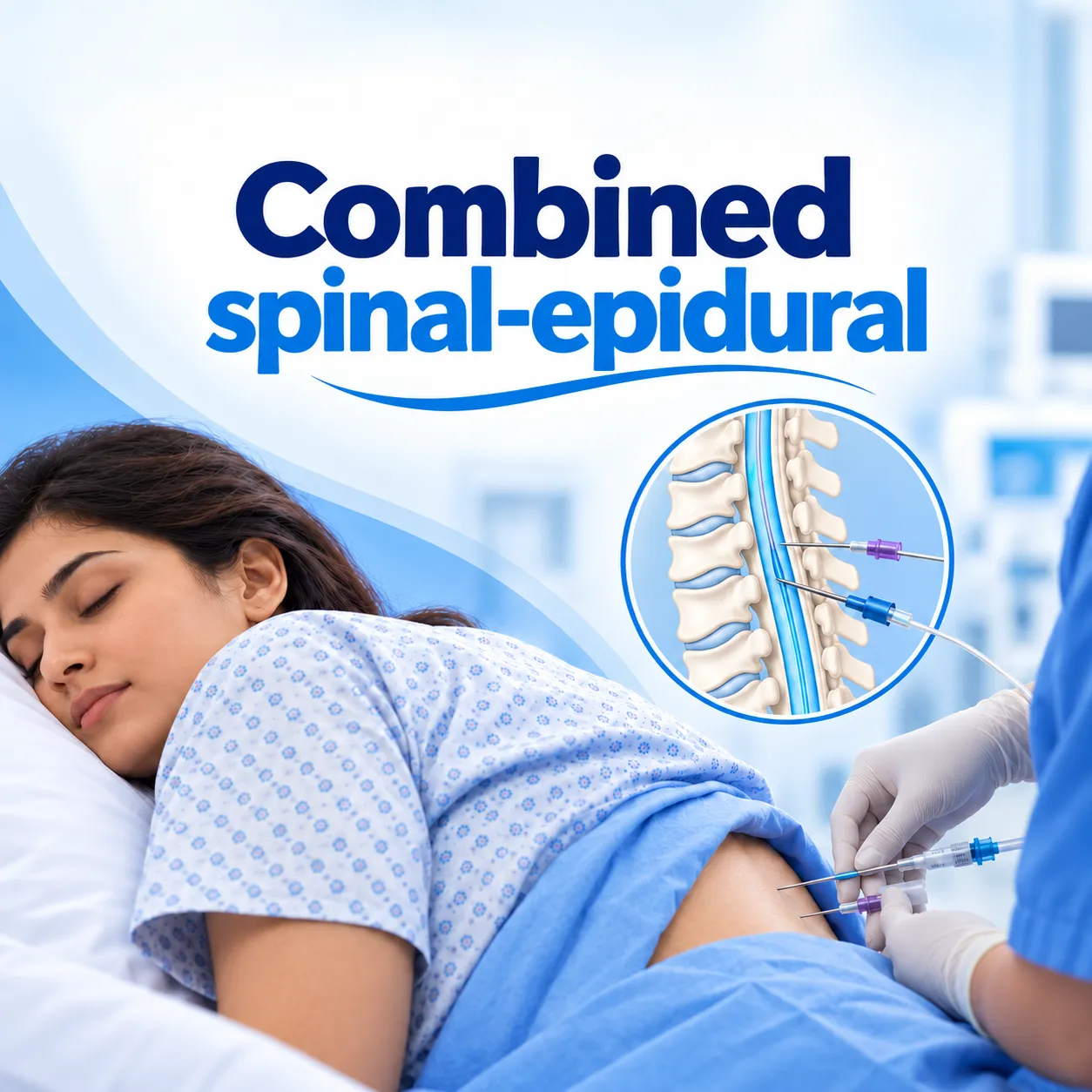
Combined spinal-epidural
This lasts for minutes, so it can be beneficial should labour be quick. Only a small spinal injection is necessary, and then the epidural catheter will be used for the rest of the procedure.

Nitrous oxide (laughing gas)
You inhale it using a mask as you are getting ready for a contraction. It reduces the intensity of pain; it doesn't turn off the pain, and it goes away even quickly after stopping. It causes some women to feel dizzy or queasy.

Non-drug methods
Slow breathing, change of position, birthing ball, a warm compress applied to the lower back, and a steady presence next to you. A lot of women begin here and ask for medicine a couple of hours later.
Considering painless delivery?
Speak with an obstetrician to understand whether epidural analgesia is suitable for your pregnancy and labour plan.
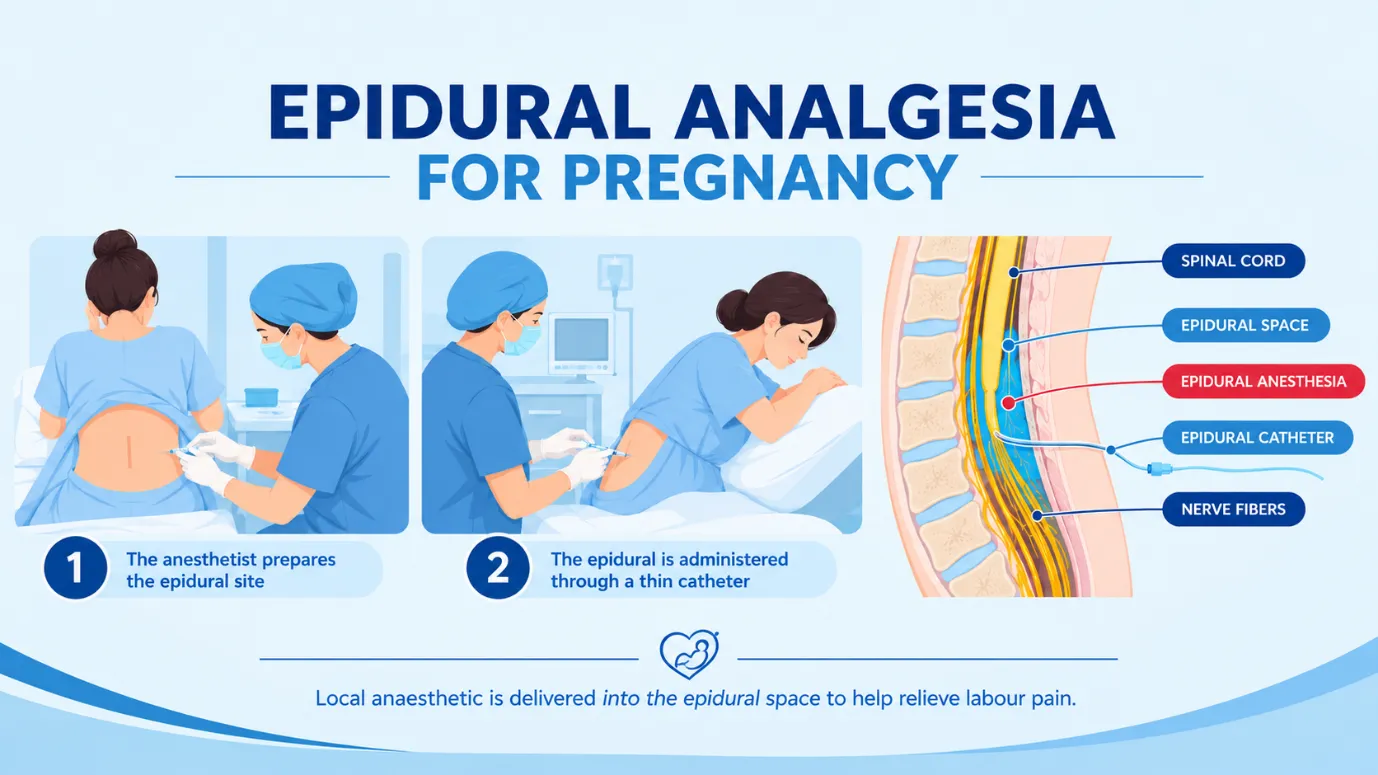
Understanding Epidural Analgesia in Painless Delivery
The most common way to deliver a pain-free baby is to use epidural pain relief.
What it is: A low-dose local anaesthetic (which may also contain a small amount of opioid) injected into the area around the nerves in your lower back.
Its effectiveness: Epidurals are one of the most effective methods of labour pain relief.
Low dose – most women do not lose leg movement at this dose. Time to full effect: Approximately 10-20 minutes
Who is it suitable for?
Most healthy women:
Most healthy women in labour are suitable candidates.
When it may be unsuitable or need extra planning:
- A bleeding disorder or low platelet count
- An infection near the injection site
- A spinal condition or previous back surgery
- Recent use of blood-thinning medication
Women under high-risk pregnancy care are assessed individually, and the pain relief plan is usually made earlier. That includes women with high blood pressure or twins, women who have had PCOS treatment, and those whose pregnancy began after infertility treatment, including IUI treatment or IVF treatment. The final call follows a proper assessment.
Planning your delivery can make decisions easier during labour.
Discuss pain relief options, timing, benefits, and possible risks with your maternity care team.
What is the Actual Process of Painless Delivery?
Here’s how it typically goes:
1. Assessment
Your blood pressure, platelet count, and history are checked, and the procedure is explained before consent is taken.
2. Positioning
You sit curled forward or lie on your side while the lower back is cleaned and the skin is numbed.
3. Placement
The catheter goes in over about 10–15 minutes. Staying still through a contraction is the hard part, so it’s done between contractions.
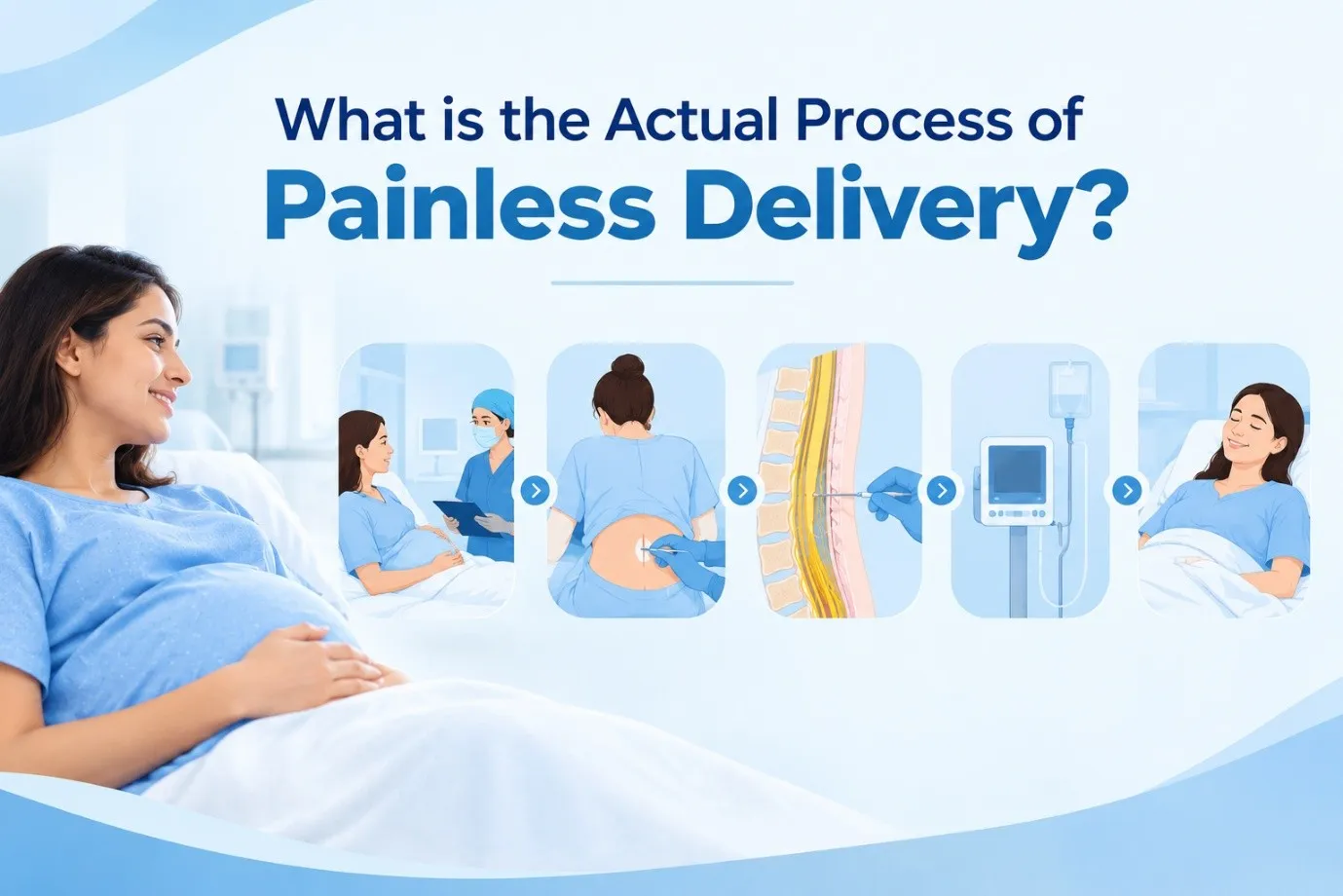
4. Monitoring
Blood pressure is checked often in the first half hour, and the baby’s heartbeat is tracked continuously.
5. Top-ups and birth
The dose is adjusted as labour progresses. You’re coached through pushing even if the urge feels dulled.
6. After delivery
The catheter comes out, and leg strength usually returns within a few hours. Postnatal care then covers recovery, feeding support, and follow-up.
Most of these decisions are easier when they’re settled during delivery planning, well before the first contraction.
Every woman experiences labour differently. Pain-relief options such as epidural analgesia should be planned individually after assessing her health, labour progress, and preferences.
Dr. Ankesh R. Sahetya:
What are the Advantages and Disadvantages of Painless Delivery?
Advantages
Less pain, less exhaustion. A long labour is easier to manage when you can rest between contractions.
You stay awake. You’re present at birth, with no general anaesthesia involved.
Flexible if plans change. If a cesarean delivery becomes necessary, the same catheter can often be topped up instead of starting fresh.
Disadvantages
Low blood pressure. A drop in blood pressure is common and quickly treated, which is why it’s checked so often.
Itching or shivering in some women.
Heavy legs and a weaker urge to push. This can lengthen the pushing stage, and a urinary catheter is sometimes needed.
Headache after the procedure. It’s uncommon and treatable.
Back soreness at the injection site for a few days. Long-term backache hasn’t been linked to epidurals.
Benefits and risks vary by individual, so the decision should follow a conversation with your obstetrician and the anaesthesia team.
Why Choose Pushpaa Hospital for Painless Delivery in Andheri West?
Choosing where to deliver depends on what surrounds the epidural, not only the epidural itself. Pushpaa Hospital has delivered over 18,000 babies since 1986, and pain relief is handled as one part of complete pregnancy care rather than a separate service.
Planned early
Pain relief is discussed during pregnancy visits, so it isn’t raised for the first time mid-contraction.
Assessment before placement
History, platelet count, and back problems are reviewed first.
Both delivery routes covered
A normal delivery, or a move to a caesarean, is managed within the same hospital.
One team throughout
Raju R. Sahetya and Dr. Ankesh R. Sahetya, both obstetricians and experienced gynecologists in Andheri West, follow your care from antenatal visits through delivery.
Beyond maternity care, the same hospital also offers menopause treatment and advanced laparoscopy & hysteroscopy for conditions such as fibroids and ovarian cysts.

Frequently Asked Questions
1) Are there any pains associated with a painless delivery?
Not completely, as analgesia takes away much of the pain, but some pressure or tightening during contractions is still common.
2) How safe is painless delivery for the baby?
Because the medicine acts mainly near the spinal nerves, epidural analgesia is generally considered safe, and the baby’s heartbeat is monitored throughout.
3) When can an epidural for painless delivery be given?
Once labour is established, often with the cervix around 4–5 cm, though timing is decided case by case.
4) Can painless delivery cause back pain?
It is common for the area where the needle is given to become painful after a short time, but there is no evidence that epidurals cause long-term backache.
5) When is it not safe for someone to have a painless delivery with an epidural?
Other options may be needed for women who have a bleeding disorder, low platelets, an infection at the injection site, or are on recent blood thinners.